Mangoes
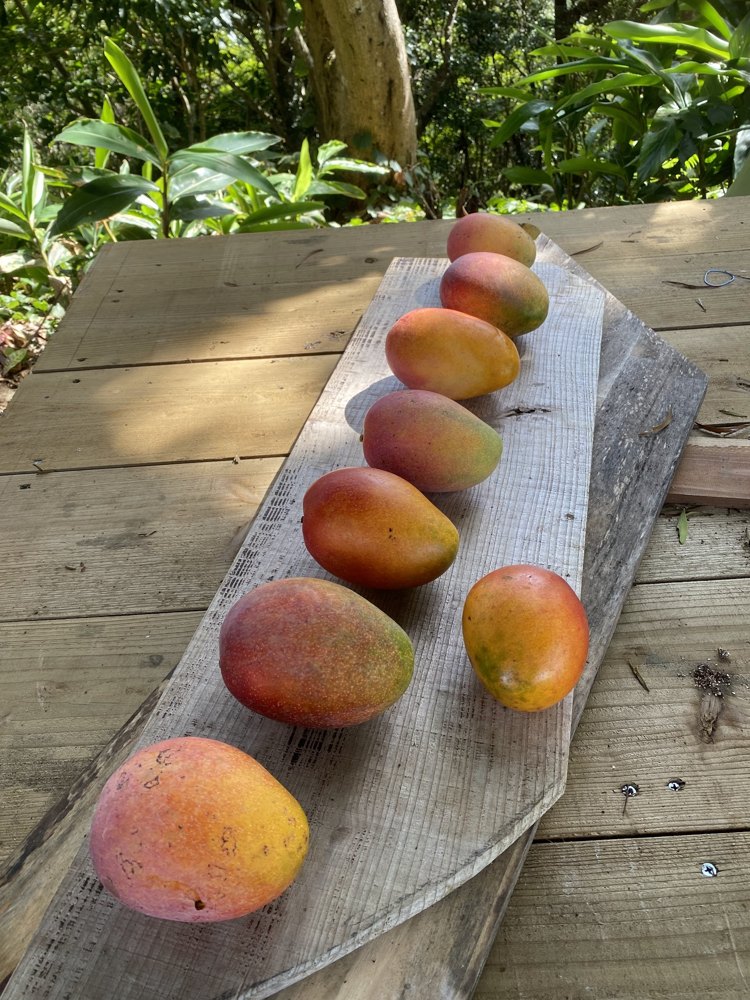
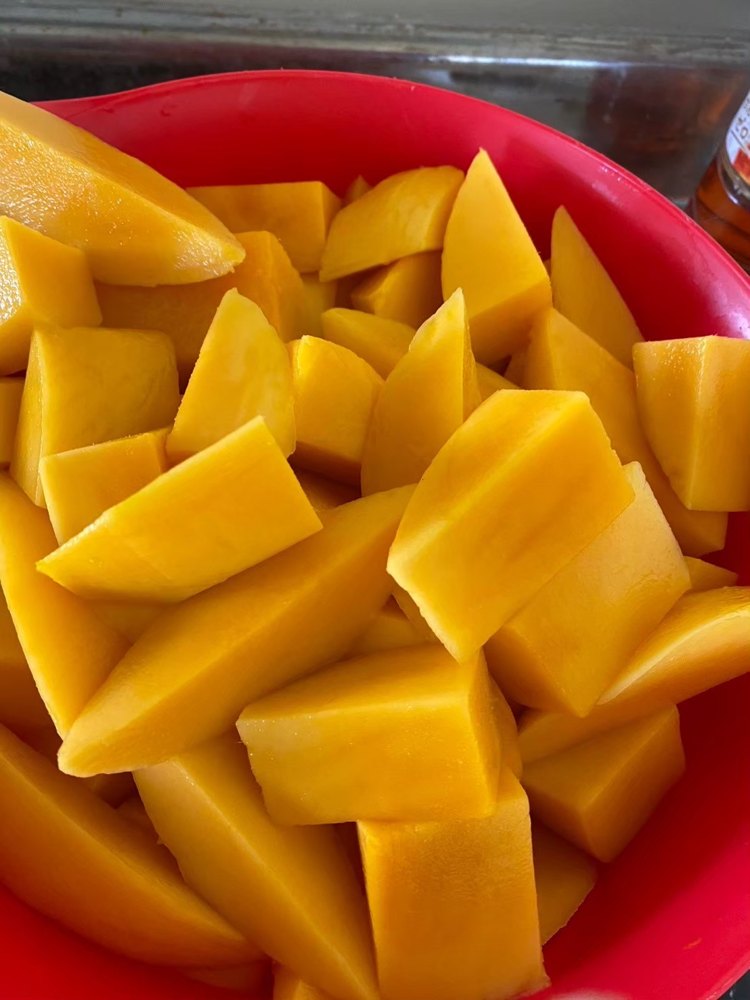
Yanbaru Genki-dama Mango
Sales season: Summer
Sold only in summer. We announce the reservation period in our News.
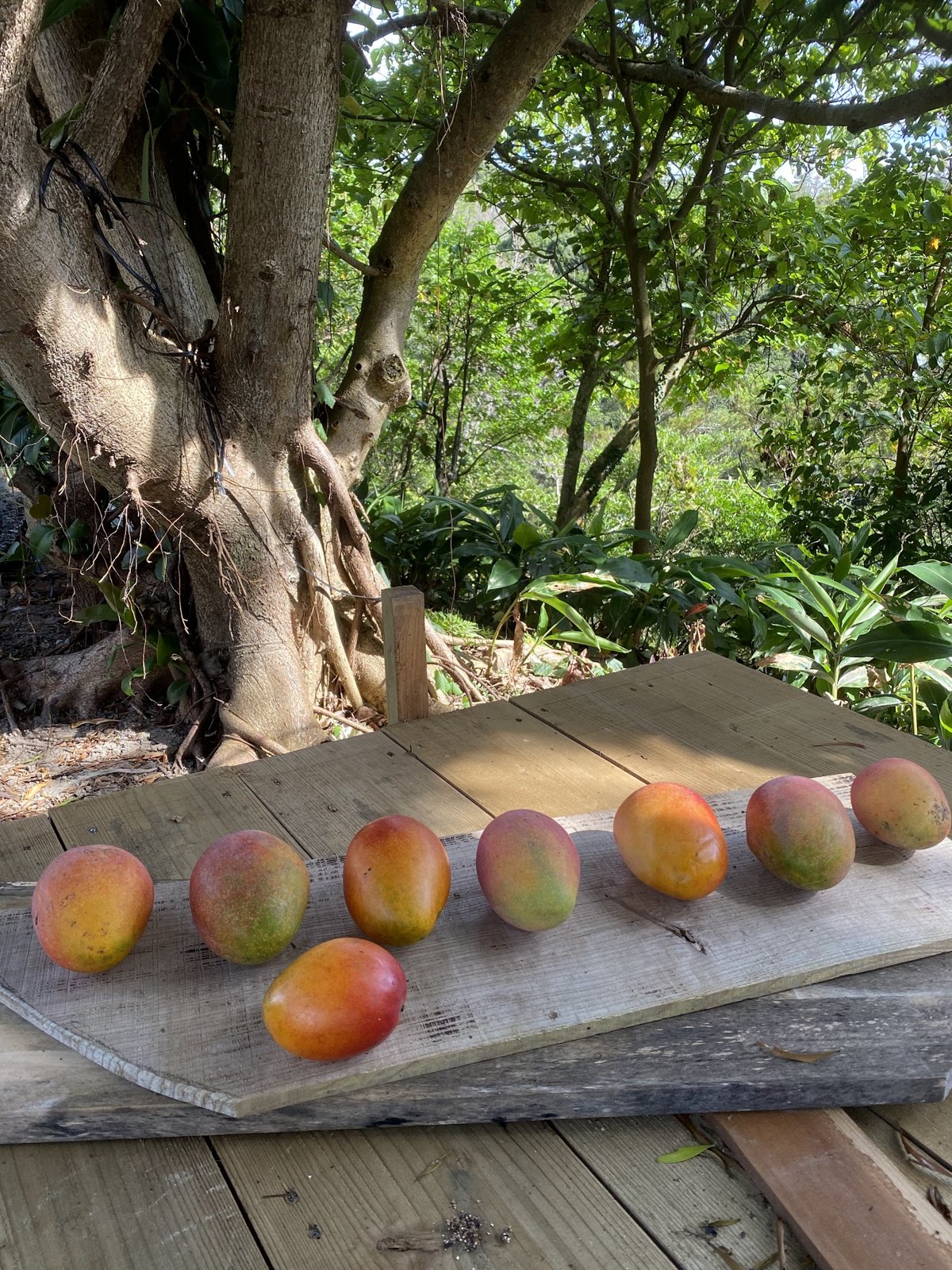
How Our Mangoes Grow
It takes a whole year for a single fruit to grow.
Aug–Sep
① Soil preparation
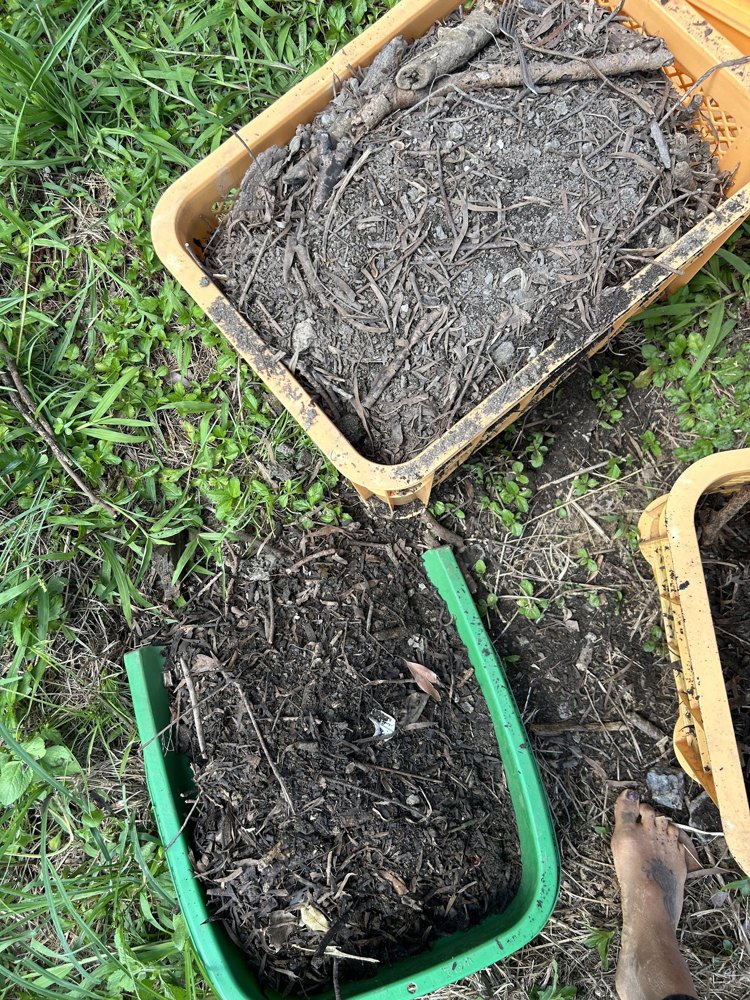
We give the trees that finished harvesting a thank-you fertilizer and tend the soil.
Aug–Dec
② Pruning the branches
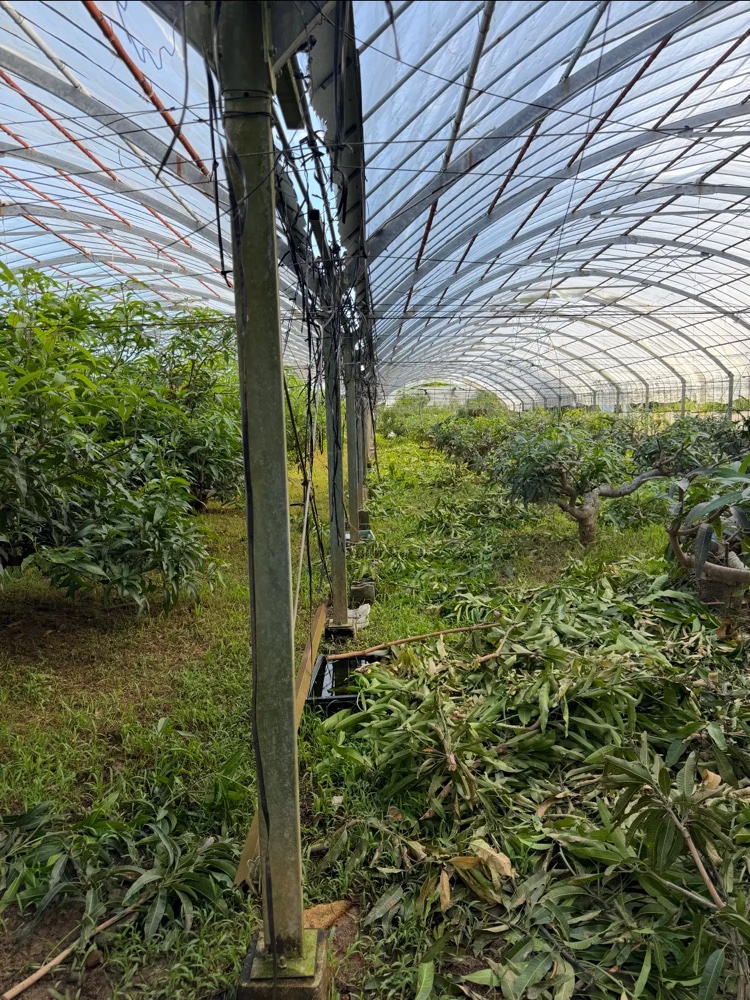
We trim the branches and prepare for the flowers to bloom.
Jan–Mar
③ Flowering
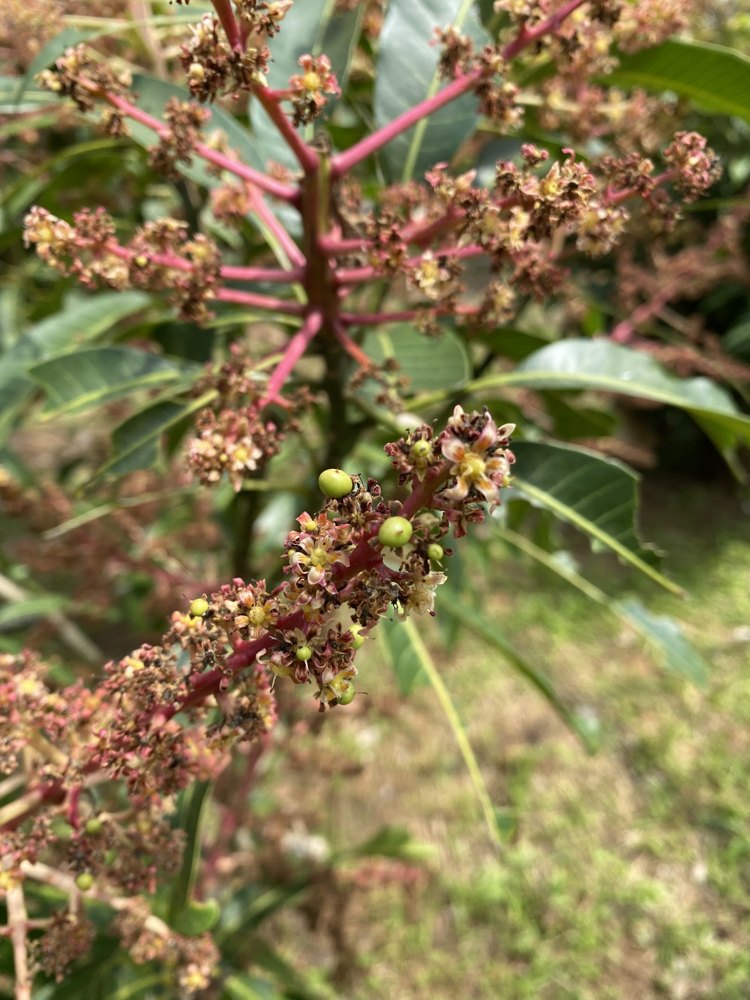
Many small flowers bloom, and fruit begins to form.
May–Jun
④ Bagging the fruit
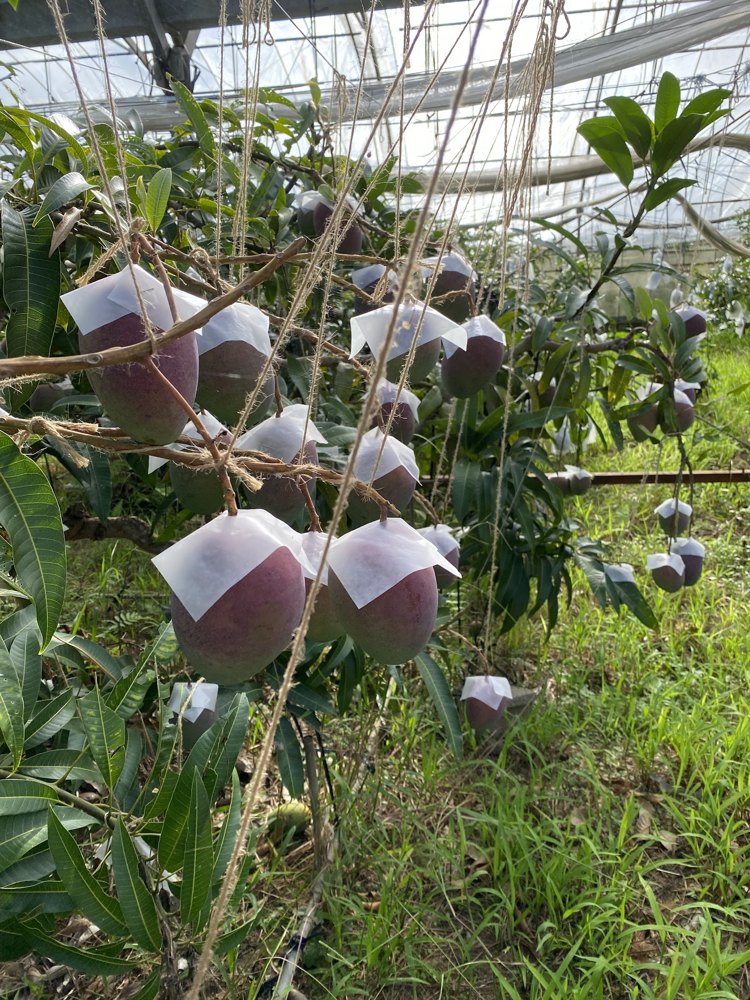
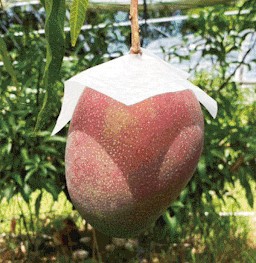
We choose the grown fruit and protect each one with a bag.
Jul–Aug
⑤ Harvest
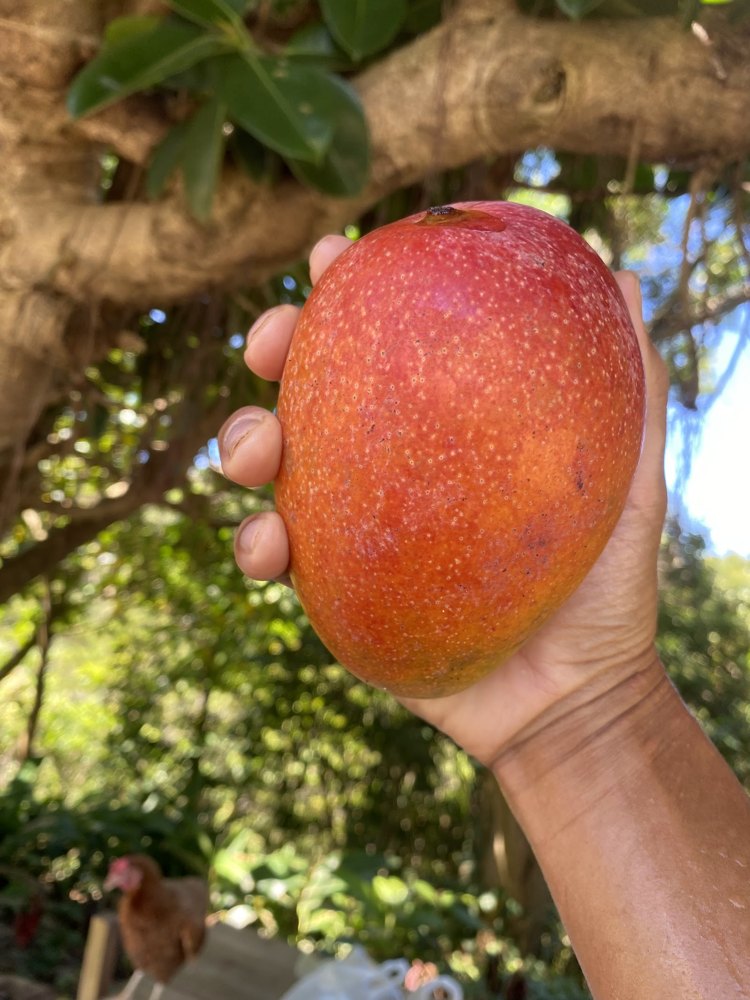
We harvest, one by one, the fruit that has ripened on the tree.
Our Commitment to Mangoes

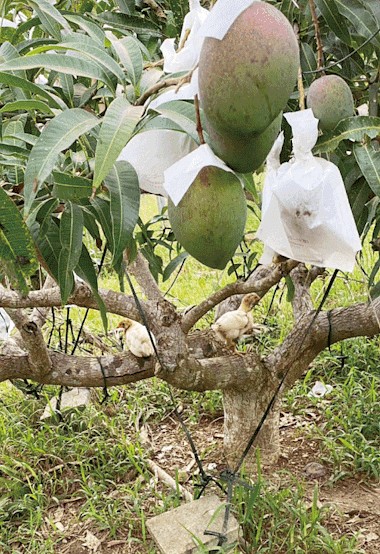
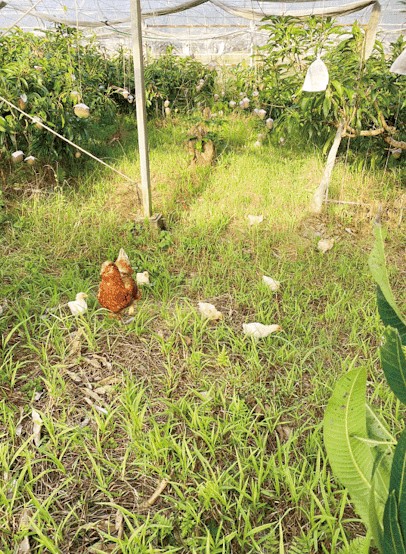
We grow mangoes together with the chickens.
Natural circular farming from our own research
We do not use pesticides or chemical fertilizers while the mangoes are being grown.
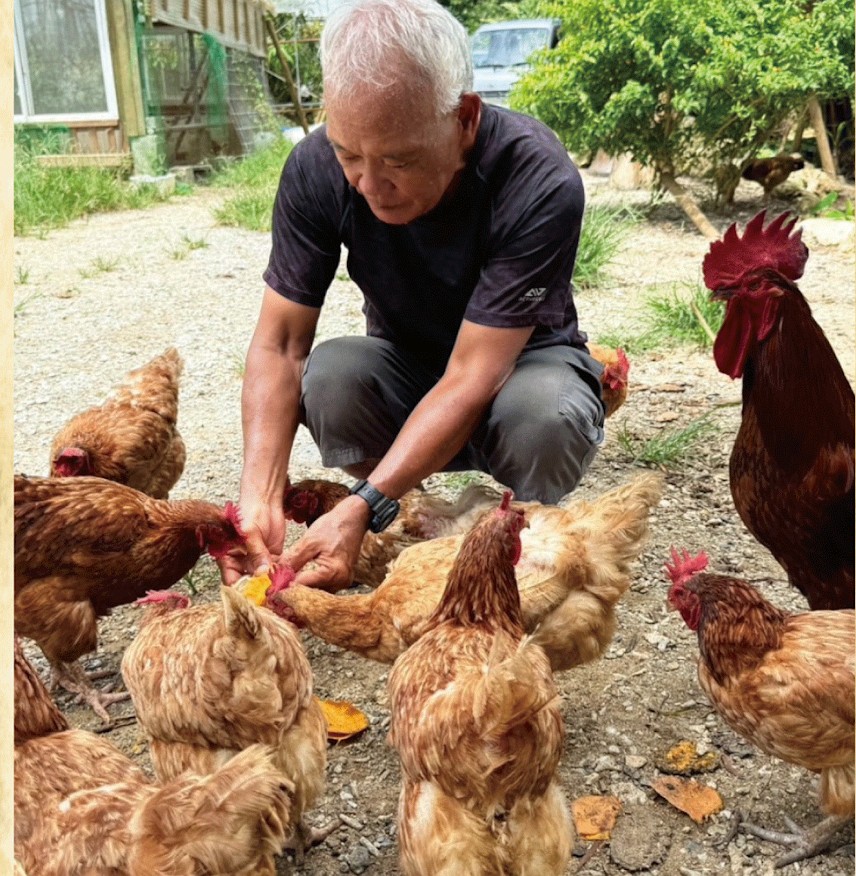
In the mango orchard, we coexist with the chickens.
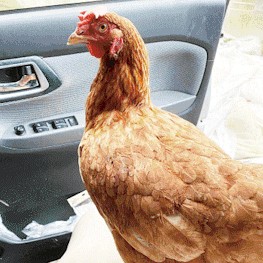
We take in spent hens, chickens that no longer lay eggs and would otherwise be disposed of, and raise them with care, feeding them rice and Okinawan soil microbes.
A great natural environment and human affection have a mysterious power. Spent hens that had lost their feathers grew thick, fluffy plumage all over, and a moving miracle occurred: ten or more chicks were born.
Today, new chicks are born from the spent hens and the generations are changing over.
Next-Generation Mangoes Raised by People and Chickens Together
The chickens eat the grasshoppers that eat mango leaves. They also scratch the ground with their feet and supply oxygen to the soil: very reliable hard workers.
Our Commitment to Soil
We ferment fish scraps discarded by fish shops using Okinawan soil microbes and give them to the soil as nutrient-rich fertilizer.
Fertilizer made from the precious lives of the fish gives the mangoes even more vitality. We prepare the soil with love, wishing for the health of the Earth, animals, plants and people alike.
Thank-You Fertilizer (Orei-goe)
The mangoes that people and chickens raised with love have borne fruit.
All of our staff scattered a special original mango fertilizer, made by fermenting our own mangoes, as a thank-you fertilizer! It is an important company event in which all of us express our deep gratitude to the mango trees that bore so much fruit.
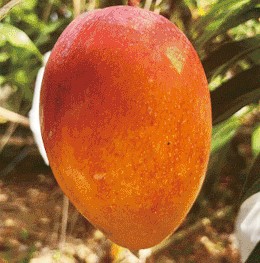
Gentle, Natural Sweetness

A mango above 12 degrees Brix is generally said to be very sweet.
Customer Voices
We received it as a gift: fresh mango you can only eat in summer! My child kept eating it, saying it was sweet and delicious, so we’ll order again this year!
We are receiving happy comments from customers all over Japan, such as “I’ve never eaten such a sweet mango!”
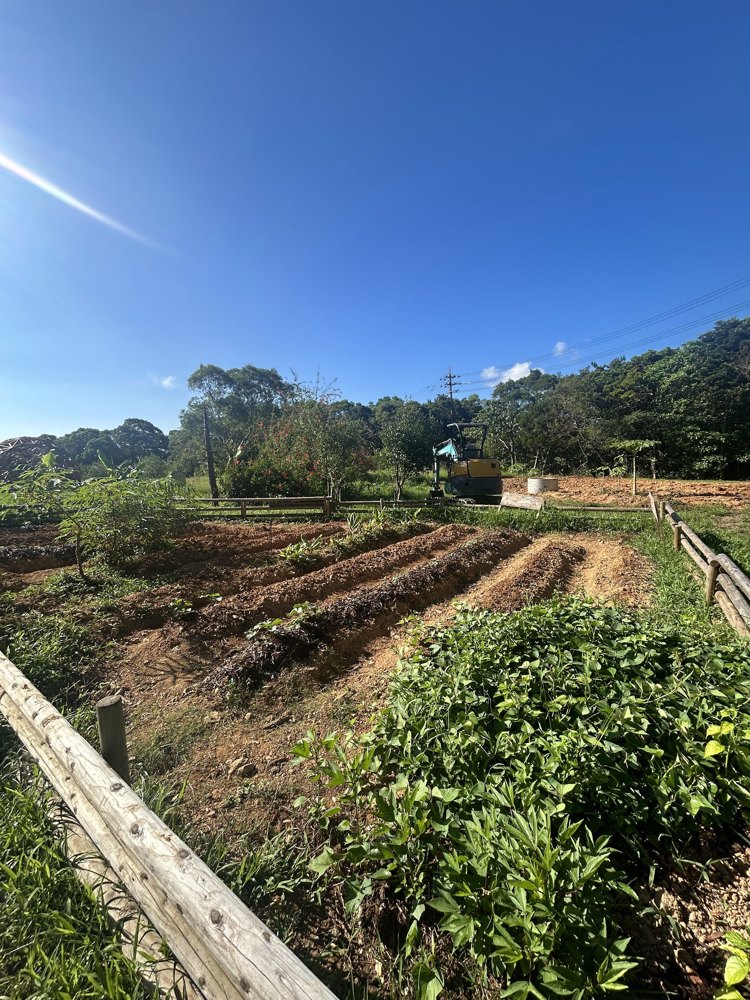
The Field
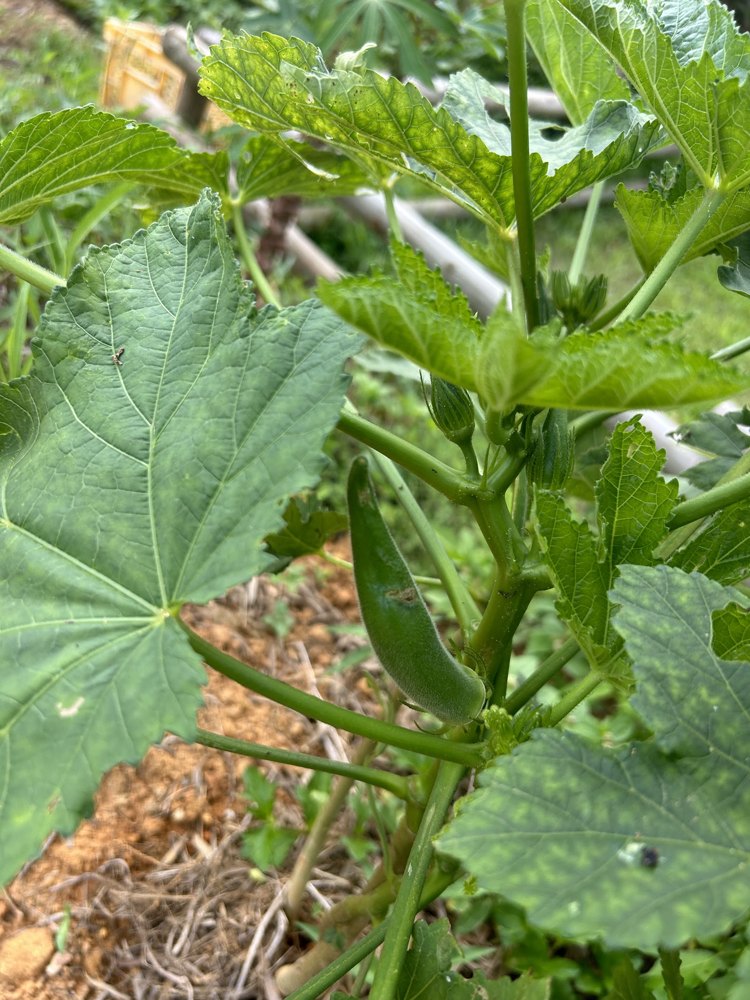
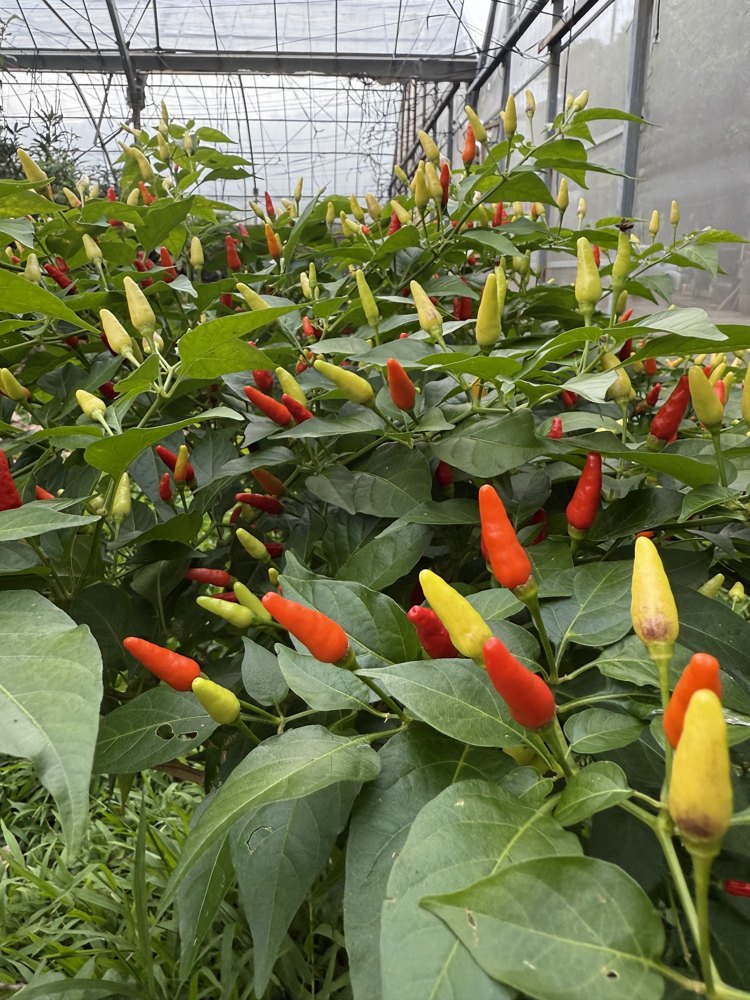
Besides the mango orchard, we also grow okra, chili peppers and more in our field.